Opioids
York Region is experiencing a drug poisoning emergency like many other regions across Canada. In the past few years, opioid-related deaths have continued to slowly rise.
York Region is responding to this crisis through a number of initiatives, such as:
- York Region Opioid Action Plan
- Community Opioid and Drug Response Collaborative
- Distribution of naloxone kits and harm reduction supplies
- Data and early warning
Join a growing number of agencies and organizations in York Region striving to provide more sensitive and responsive services for clients who use substances.
Engaging Clients who Use Substances eLearn can support organizational efforts in creating a shared understanding and application of stigma and harm reduction, trauma-informed approach, and screening and brief intervention using motivational interviewing principles.
Together, we can reduce the stigma that surrounds substance use.
About opioids
Opioids are substances which can be prescribed to treat pain, severe cough and diarrhea. Some people use opioids because of their euphoric effect. Examples of opioids include fentanyl, heroin, morphine, oxycodone, codeine and hydromorphone. Opioids can be addictive, and if taken at high doses, can cause coma or death. Special types of opioids, including methadone and buprenorphine/naloxone, are used in opioid treatment programs.
What is fentanyl?
Fentanyl is an opioid that is approximately 100 times more potent than morphine and 40 times more potent than heroin. Fentanyl can be prescribed by a physician or obtained through an unregulated, toxic supply. Fentanyl and its analogues are trafficked and sold in many different forms including patch, powder, pill and liquid. “Street” drugs can be contaminated with fentanyl making them more potent and increasing the risk of overdose. Fentanyl use and overdose has been on the rise in Ontario over the last several years.
For more information on opioids, visit Health Canada’s webpage.
Signs of an opioid poisoning/overdose
It’s important to understand the risks and recognize the signs of someone experiencing a poisoning/overdose, so you can take steps to prevent a poisoning/overdose death.
What is a poisoning/overdose?
A poisoning/overdose occurs when a person uses a drug or combination of drugs that the body cannot handle. The current poisoning/overdose crisis is largely a result of an unregulated drug supply.
What are the signs of an opioid poisoning/overdose?
Someone may be experiencing an opioid poisoning/overdose if they:
- Can’t stay awake, walk or talk clearly
- Are breathing slowly or not at all
- Have a limp body or muscles are rigid
Other signs of poisoning/overdose include:
- Not responding to noise or shaking of shoulders
- Snoring or gurgling sounds
- Pale or blue, grey or purple skin—especially on their nail beds and lips—and they feel cold
- Tiny pupils (pinpoint) or their eyes are rolled back
- Vomiting
Call 911 immediately to get help - see the ‘Responding to an opioid poisoning/overdose’ section.
For more information about opioid poisoning/overdose, visit Health Canada or Ontario.ca/opioids
You are at risk of an opioid poisoning/overdose if you:
- Are using street drugs
- Are taking more than your prescribed dose of opioids
- Are taking prescription opioids that were not prescribed to you and could be too strong for you
- Are mixing your opioids with alcohol or anxiety medications (for example, Valium, Xanax)
- Have overdosed on opioids before
- Have stopped using opioids for a while, which has lowered your tolerance
How to reduce the risk of an opioid poisoning/overdose death
- Try not to use alone so someone can check on you in case you experience poisoning/overdose. If you are alone while using substances, National Overdose Response Service (1-888-688-6677) is a service to support you over the phone and can call 911, if needed
- Do not mix drugs or take drugs with alcohol. The risk of poisoning/overdose increases if opioids are mixed with alcohol, sleeping or anxiety pills, other opioids or other prescription medications
- Start low and go slow. If using opioids after cutting down, after not using for a while, or getting them from a new source, use less and do a test dose to see how you feel/respond
- Check your drug before using. Ask others what they are experiencing with the same batch or if possible, check your drug at a drug checking service in Toronto
- Have and be trained to use naloxone - see the ‘Where to get naloxone’ section for more information on where to get a naloxone kit
Responding to an opioid poisoning/overdose
When you think someone is experiencing a drug poisoning/overdose, follow steps to use naloxone to help save a life. Always call 911 if someone is experiencing an opioid poisoning/overdose, even if naloxone was given.
The Good Samaritan Drug Overdose Act provides some legal protection for people who experience or witness an overdose and call 911 or their local emergency number for help.
Where to get naloxone and harm reduction supplies
Nasal and injectable naloxone kits and refills are available without a prescription, at no cost for people who are at risk of opioid poisoning/overdose and for their concerned friends and family members.
York Region is currently working with the following partners to distribute naloxone:
- 360°kids
- Access York
- 17150 Yonge Street, Newmarket, 3rd floor
- 24262 Woodbine Avenue, Keswick
- 50 High Tech Road, Richmond Hill, 3rd floor
- 9060 Jane Street, Vaughan
- Addiction Services Central Ontario
- Blue Door (for clients only)
- Canadian Mental Health Association York Region and South Simcoe
- Caritas School of Life
- CAYR Community Connections
- Chippewas of Georgina Island Health Centre
- Inn from the Cold
- John Howard Society
- LOFT Street Outreach Van
- Markham Stouffville Hospital (for clients only)
- Southlake Health (for clients only)
- The Krasman Centre
- The Vitanova Foundation
- York Region Outreach Services
- York Region Paramedic Services
- York Region Sexual Health Clinics
Naloxone can also be picked up at a participating pharmacy.
Visit york.ca/harmreduction for more information on where to get safer injection and inhalation supplies.
Opioid trends in York Region
View the latest York Region Drug Information/Alerts. If you wish to receive email updates directly, please contact @email to request to add your email to the mailing list.
July 24, 2026
May 3, 2026
March 12, 2026
January 15, 2026
March 21, 2025
March 1, 2024
February 2024
January 26, 2024
September 30, 2023
August 4, 2023
June 23, 2023
May 12, 2023
May 5, 2023
March 24, 2023
February 10, 2023
January 4, 2023
For information on substance use and harms data in Ontario visit York.ca/healthdata or Substance Use and Harms Tool.
Report drug poisoning/overdose or sign up for drug information/alerts
If you or someone you know had a harmful or unexpected reaction to street drugs (unregulated supply) including an overdose or drug poisoning, you can make an anonymous and confidential report to York Region and potentially help save someone’s life.
York Region Opioid Action Plan
The 2024 Opioid Action Plan builds off the work of the original document launched in 2019, and has outlined 20 different actions, organized into six areas of focus:
- Stigma reduction
- Prevention
- Harm reduction
- Treatment
- First response and community safety
- Data and Early Warning
A community approach is essential. We need to work together to address the challenges faced by our community and people who use drugs.
For more information, please contact the Substance Use Prevention and Harm Reduction Program at 1-877-464-9675 ext. 76683 or email @email
Do your part to reduce stigma
Whether someone you love or know uses substances or not, you can help reduce the stigma experienced by people who use substances such as opioids. Stigma is negative attitudes, beliefs or behaviours about or towards a group of people because of their situation in life. It includes discrimination, prejudice, judgment and stereotypes, which can isolate people who use drugs and prevent them from talking about their substance use and reaching out for support.
What is stigma?
Stigma is prejudice and discrimination toward people who use substances. Stigma isolates people and can lead to feelings of guilt, shame, hopelessness and greater harm to the individual and community. People may experience additional stigma and discrimination because of their age, disability, religion, gender identity, sexual orientation, race, Indigenous identity or housing insecurity.
Examples and effects of stigma include:
- negative attitudes or behaviours towards people who use drugs or towards their friends and family members
- negative labels and images in everyday conversation and in the media
- policies in health and social services that increase stigma, such as not providing services until drug use is better managed
- when healthcare providers or first responders do not take people affected by drug use seriously
- using substances alone which increases the risk of overdose/poisoning
- feelings of shame and hopelessness, isolation and using substances to cope
Stigma can result in exclusion from accessing and maintaining work, a safe place to live and other health and social services. Learn more about the three types of stigma: structural stigma, social stigma and self stigma.
Actions to reduce stigma
Together we can reduce stigma, increase inclusion, empathy and connections by:
- Learning about opioids and how to use naloxone to save a life
- Seeing people for who they are, not for their drug use
- Listening with compassion and respect so people feel heard and understood
- Talking about stigma and share experiences that impact ourselves or others
- Organizing or attending stigma reduction education or community events
- Including people with lived/living experience in stigma reduction work
- Including peer support in health and social services involving substance use
- Reviewing policies and programs to promote equity
- Being inclusive and welcoming to people who use drugs
- Using people first language – “a person who uses substances” instead of “junkie,” “people living with a substance use disorder” instead of “addict”
Change the language
- Inclusive Language Guide (York Region)
- Communicating about Substance Use in Compassionate, Safe and Non-Stigmatizing Ways - A Resource for Canadian Health Professional Organizations and their Membership (Public Health Agency of Canada)
- Overcoming Stigma through Language – A Primer (Canadian Centre on Substance Use and Addiction)
Listen
- Beyond Stigma Videos
- Stop Stigma, Save Lives (Northern Health)
- See beyond – see the lives (Moms Stop the Harm)
- The Opioid Chapters (Ontario Drug Policy Research Network and Healthy Debate: Faces of Healthcare)
- Audio series on opioids: In Plain Sight (Health Canada)
- I’d rather struggle (AIDS New Brunswick)
Learn
- Engaging Clients who Use Substances eLearn (Northern York South Simcoe Best Practice Spotlight Organization Ontario Health Team’s Engaging Clients Who Use Substances Working Group)
- Reducing Stigma (Towardtheheart.com)
- Understanding Stigma: A free online course for healthcare providers and other frontline clinicians (Centre for Addiction and Mental health)
- Stigma around Drug Use (Health Canada)
Act
- Workplace Safety (Canadian Centre on Substance Use and Addiction)
- A Primer to Reduce Substance Use Stigma in the Canadian Health System (Canadian Centre on Substance Use and Addiction)
- Each and Every: Businesses for Harm Reduction
- Equity, Anti-Racism, and Anti-Oppression (Addictions & Mental Health Ontario)
International Overdose Awareness Day
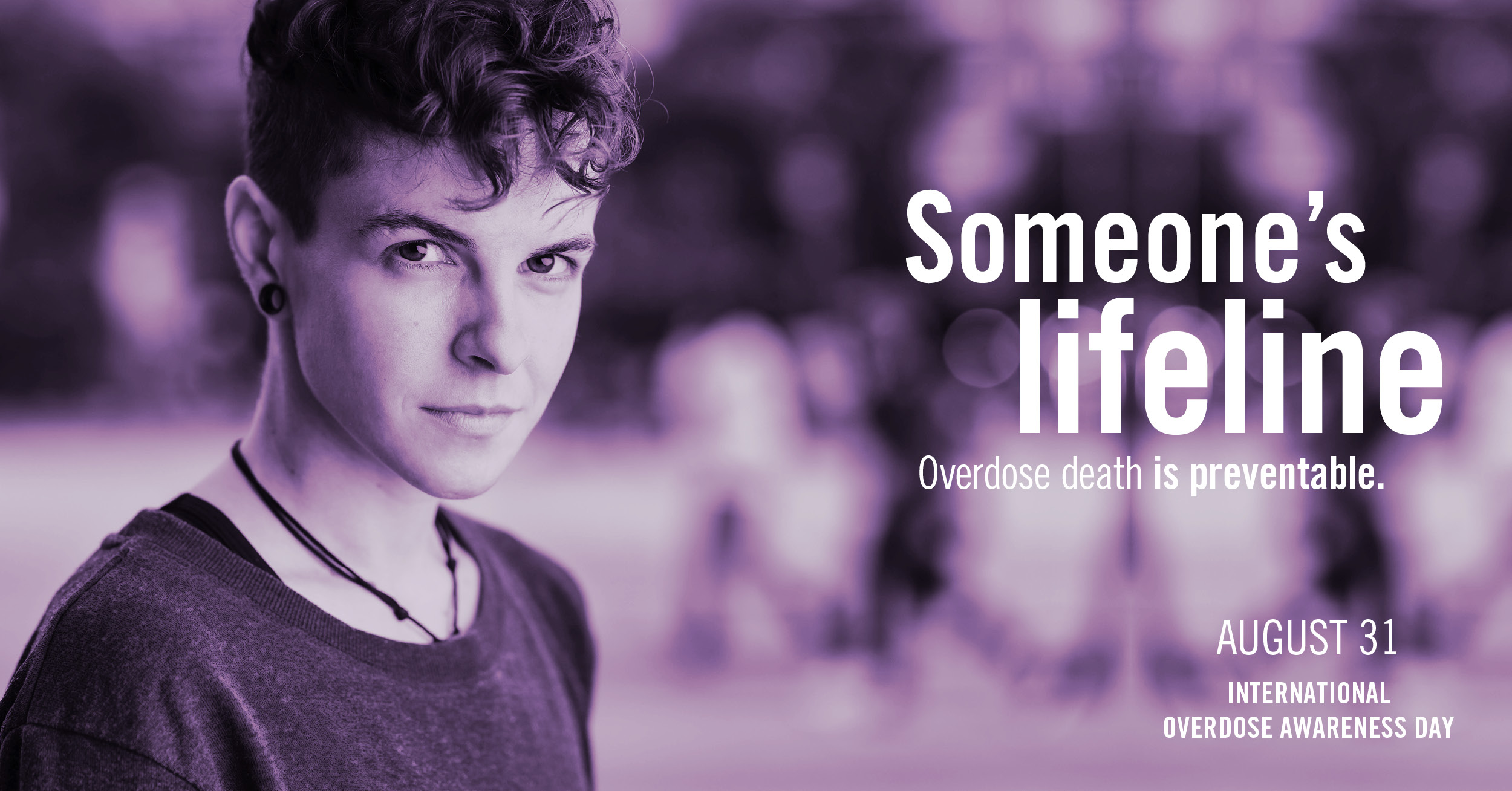
On August 31, people across the world take time to bring awareness to drug poisoning (overdose) as well as honour – without judgment or stigma – individuals who have lost their lives because of drug poisoning and acknowledge the grief felt by their family and friends.
We encourage you to use the information on this page to do your part to help end stigma and help prevent drug poisoning-related death.
Visit overdoseday.com to learn more. International Overdose Awareness Day is an initiative of Penington Institute.